






When AI Moves From Insight to Action

23 July, 2026

Bengaluru

About the Forum

India’s enterprise AI story is moving fast. AI is already embedded across functions, from risk and operations to customer engagement and product development. What’s changing now is more structural: systems are moving from generating insights to executing decisions within defined parameters.

This shift is playing out most sharply in India, where scale, talent, and demand are converging to make the country a test bed for how autonomous AI systems are built and rolled out.

The change, however, adds a new layer of complexity. As AI systems gain autonomy, enterprises must determine where it drives value, where it amplifies risk, and how control is defined and enforced.

For Indian organizations operating at scale, this isn’t a future-state question; it’s already an operational challenge. Autonomous capabilities are being deployed unevenly across functions, often without clear frameworks for accountability, oversight, or performance measurement.

The AI Research Forum produced by MIT Sloan Management Review India is designed to examine this transition in practice. A global initiative with editions in the Middle East and Asia brings together enterprise leaders, researchers, and practitioners to examine how organizations are deploying, managing, and scaling AI systems, and how decision-making authority is shifting as a result.

Past Edition Sponsors

Who Should Attend

The forum is designed for senior executives and decision-makers leading AI strategy, operations, and transformation. These include CXOs, CTOs, CDOs, and business unit heads across industries actively deploying or scaling AI.

This is a closed-room, senior-level forum.

  • Manager level and above only
  • Enterprise organizations
  • Active AI adoption or deployment


Limited seats. Applications are reviewed manually.

Apply for Delegate Passes

Key Themes

  • Develop a clear and actionable strategy to integrate Agentic AI into your operations
  • Learn how to foster internal collaboration and prepare your teams for AI adoption
  • Gain insight into how Agentic AI offers a competitive edge in your industry

Who Should Attend

The forum is designed for senior executives and decision-makers leading AI strategy, operations, and transformation. These include CXOs, CTOs, CDOs, and business unit heads across industries actively deploying or scaling AI.

This is a closed-room, senior-level forum.

Limited seats. Applications are subject to review.

Apply for Delegate Passes

Attendees Receive

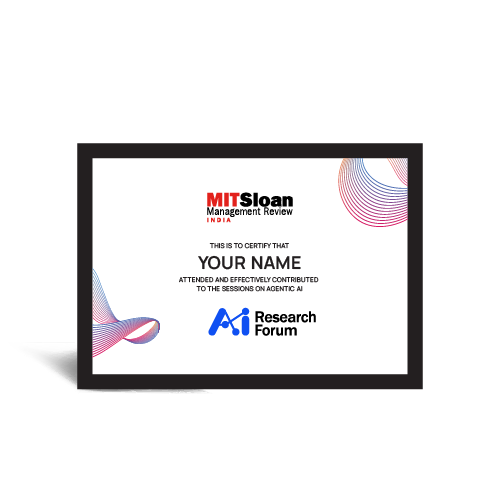
Certificate of attendance
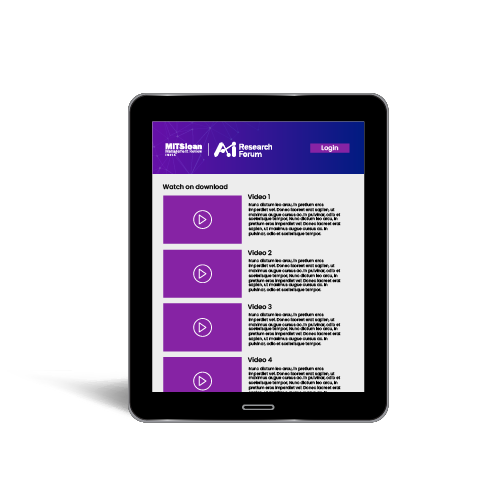
Training sessions with select speakers
Synopsis of each session with key takeaways
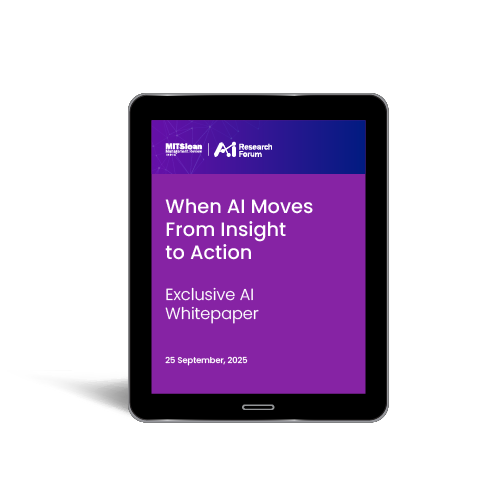
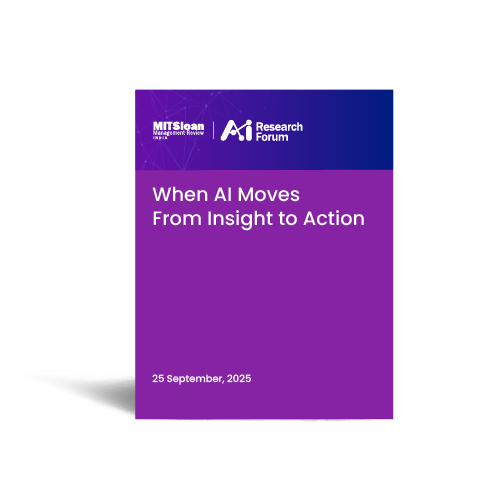
Free download of MIT SMR’s exclusive AI whitepaper


I got more out of this four-hour event than three days at a coaching conference.

2023 Summit Attendee

All the speakers were great. I took pages of notes and downloaded all the handouts.

2023 Summit Attendee

Amazing value! Very interesting presentations and useful insights.

2024 Summit Attendee

Speakers

Thought Leaders

Amit Kaushik

Chief Information Officer,
Zee Entertainment

Anand Thakur

Chief Product and Technology Officer - F&L, Beauty,
Reliance Retail

Chandan Vijay

Global Chief Data Officer,
ABB Energy Industries
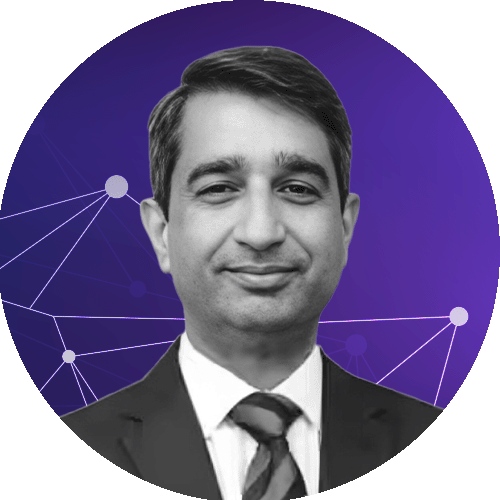
Neetan Chopra

Chief Digital and Information Officer,
IndiGo
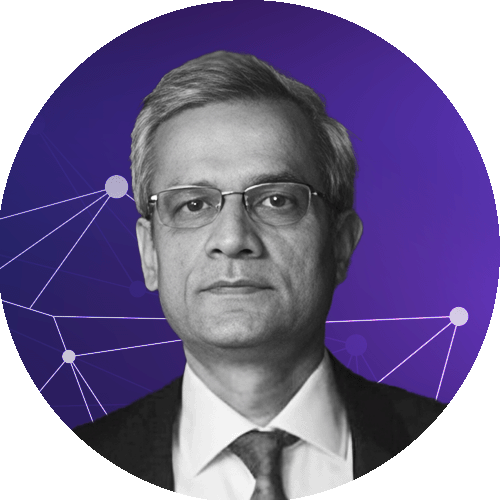
Pankaj Rai

Chief Data and Analytics Officer,
Aditya Birla Group
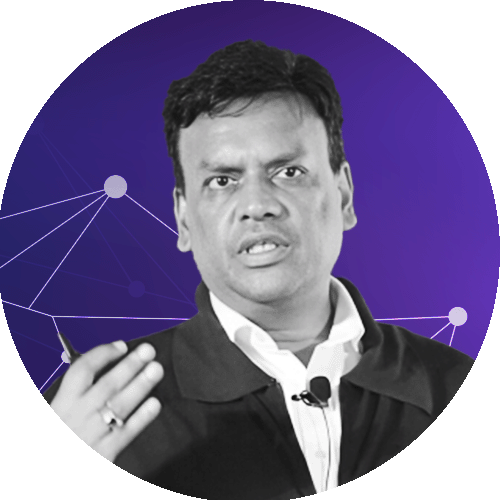
Ramesh Narayanaswamy

Group President - Digital and Data Intelligence,
Hinduja Group Limited

Sanjay Varier

VP India Digital Strategy
Wesco

Saptarshi Saha

Director of AI
Best Buy India

Industry Experts

Anirudh Narayan

Co-Founder & Chief Growth Officer,
Lyzr

Awad Ahmed Ali El-Sidiq

Head of Artificial Intelligent & Analytics
Adnoc Distribution

Geoffrey Alphonso

Chief Executive Officer
Alef Education

Jennifer George

Correspondent
MIT Sloan Management Review Middle East

Agenda

08:30 – 09:30

Registration & Networking

Abbie Lundberg, Editor in Chief, MIT SMR
Elizabeth Heichler, Editorial Director, MIT SMR

09:30 – 09:40

Welcome & Opening Remarks

Abbie Lundberg, Editor in Chief, MIT SMR
Elizabeth Heichler, Editorial Director, MIT SMR

09:40 – 09:55

Embedding AI into Core Operations

AI deployment is no longer the primary challenge facing enterprise leaders. What organizations are now navigating is more fundamental: how to make AI perform reliably as part of core operations, how to structure decisions around systems that behave differently than anticipated, and how to sustain that performance as conditions change.

AI readiness

Abbie Lundberg, Editor in Chief, MIT SMR
Elizabeth Heichler, Editorial Director, MIT SMR

09:55 – 10:25

Panel Discussion: Everyone has AI. Why are the results so different?

Organizations with similar access to AI capabilities are producing meaningfully different outcomes. Understanding that variation matters more than benchmarking performance in isolation. This panel examines the structural and organizational factors that distinguish enterprises where AI is delivering consistent value from those where results remain uneven.

10:25 – 10:40

What Human Roles Look Like When AI Executes

The impact of AI on decision-making is neither uniform nor fully understood. In certain contexts, it has demonstrably improved speed, consistency, and accuracy. In others, the relationship is more complex. How leading enterprises are defining the boundaries of AI involvement in decision-making, and what that calibration process looks like in practice.

The data gap

Abbie Lundberg, Editor in Chief, MIT SMR
Elizabeth Heichler, Editorial Director, MIT SMR

10:40 – 11:10

Why AI systems behave differently in the real world

Production environments introduce variability that controlled development settings cannot replicate. Inconsistencies in data, the complexity of live workflows, and evolving usage patterns all shape how AI systems perform once deployed. What it takes to design for those conditions, and how organizations are building the monitoring and adaptation capabilities that sustained performance requires.

11:10 – 11:30

Networking Break

Abbie Lundberg, Editor in Chief, MIT SMR
Elizabeth Heichler, Editorial Director, MIT SMR

Infrastructure modernization

Abbie Lundberg, Editor in Chief, MIT SMR
Elizabeth Heichler, Editorial Director, MIT SMR

11:30 – 11:45

What parts of the AI stack actually matter

AI performance is shaped by far more than the model. Data architecture, compute environments, legacy system integration, and cloud readiness each play a significant role in determining how AI behaves at scale. For enterprises managing complex, multi-generational technology environments, as many large organizations in India are, understanding which infrastructure decisions have the greatest leverage is essential.

11:45 – 12:00

How to buy AI when you can't yet measure it

Enterprise AI procurement is being made under conditions of significant uncertainty. Vendor demonstrations rarely reflect operational reality, performance benchmarks are inconsistently defined, and the costs of a poor decision compound over time. How enterprise leaders are structuring procurement decisions, what questions are worth asking before committing, and how to build vendor relationships that maintain accountability after go-live.

Security, governance and compliance

Abbie Lundberg, Editor in Chief, MIT SMR
Elizabeth Heichler, Editorial Director, MIT SMR

12:00 – 12:30

Panel Discussion: Where AI introduces new types of risk

As AI systems take on greater operational responsibility, the enterprise’s risk profile shifts in ways that existing frameworks were not designed to address. Model behavior, decision-level exposure, and system dependencies each introduce considerations that sit outside traditional IT risk management. How organizations are developing new approaches to oversight as AI moves closer to the execution layer.

12:30 – 13:30

Networking Lunch

Abbie Lundberg, Editor in Chief, MIT SMR
Elizabeth Heichler, Editorial Director, MIT SMR

13:30 – 13:45

What failure reveals about AI systems

Breakdowns in production often provide the clearest picture of how AI systems actually behave under operational conditions. Two enterprise leaders discuss specific failures they experienced, what those moments revealed about their systems and their organizations, and how the insights shaped their subsequent approach to design, monitoring, and governance.

13:45 – 14:15

Panel Discussion: Security, Control, and Trust in AI Systems

Maintaining meaningful control over AI systems becomes more demanding as they are integrated into core operations. Visibility into system behavior, clear lines of accountability, and governance structures that hold up in practice rather than only on paper are each increasingly significant. How enterprises are approaching security and compliance in non-deterministic AI environments, and what India’s emerging regulatory landscape means for how those frameworks are built.

Deployment

Abbie Lundberg, Editor in Chief, MIT SMR
Elizabeth Heichler, Editorial Director, MIT SMR

14:15 – 14:30

Where AI is actually delivering value

AI does not create value uniformly across functions or organizations. Some use cases are producing measurable, sustained improvements. Others have yet to justify the investment required to maintain them. How organizations are moving beyond initial deployment metrics to evaluate impact with greater rigor, and what that more honest assessment is revealing.

Skills and organizational change

Abbie Lundberg, Editor in Chief, MIT SMR
Elizabeth Heichler, Editorial Director, MIT SMR

14:30 – 15:00

Panel Discussion: Where the AI skills gap actually sits

India’s technical AI capability is considerable. The more pressing question for enterprise leaders is whether organizations have developed the complementary capacity to govern AI systems, critically interpret their outputs, and make sound judgments about where and how they should operate. Bridging that gap requires a different kind of investment than technical upskilling alone.

15:00 – 15:15

What it takes to live & work with AI systems

Operating AI over the long term introduces challenges that are distinct from those of deployment. Systems require ongoing monitoring, adaptation, and organizational commitment that extends well beyond the initial build. What sustained AI performance demands of leadership, and how are organizations managing it most effectively as a continuous operational responsibility?

15:15

Closing Remarks

Talk to Our Sponsorship Team

Copyright © . All rights reserved.

Get free, timely updates from MIT Sloan Management Review India with new ideas, research, frameworks, and more.